

🎓 Good news for local classrooms: FOCUS Broadband’s 2026 Smart Connections Grants are funding nine Brunswick County school and community projects, part of 21 projects across five counties. Since 2006, FOCUS has invested more than $1.2 million in education and community initiatives, and 2027 applications open in December. Here’s what’s coming to Brunswick County: – Bolivia Elementary — Adaptive Painting for All, plus a Mini Movie Makers Studio – South Brunswick High — Bio Lab is Fun! – West Brunswick High — Community Picnic Tables (carpentry), Microscopes for Biology, and Scales for Biology – Union Elementary — EL Story Hour – Town Creek Middle — MicroWorlds in Focus – Plus a Brunswick County Schools Science Olympiad Invitational
Blog
-
Commercial structure fire at Old Georgetown and Hale Swamp roads is under control

🔥 A commercial structure fire at Old Georgetown and Hale Swamp roads is under control, according to the Calabash Fire Department. Departments were called around 6:26 p.m. Wednesday, and by 9 p.m. the fire was under control with crews still on scene.
Nearly a dozen departments responded with trucks, tankers, and a water shuttle: Shallotte, Shallotte Point, Ocean Isle Beach, Sunset Beach, Civietown, Grissettown-Longwood, Waccamaw, Sunset Harbor, Tri-Beach, Calabash, Horry County, and Brunswick County Fire and EMS.
The cause is unclear. Reports of explosions in the area and tanks on site have not been verified, and no injuries have been reported. This was a structure fire, not a wildfire, in an area that has already seen two wildfires this year.
(Source: Port City Daily, Oct. 28)
-
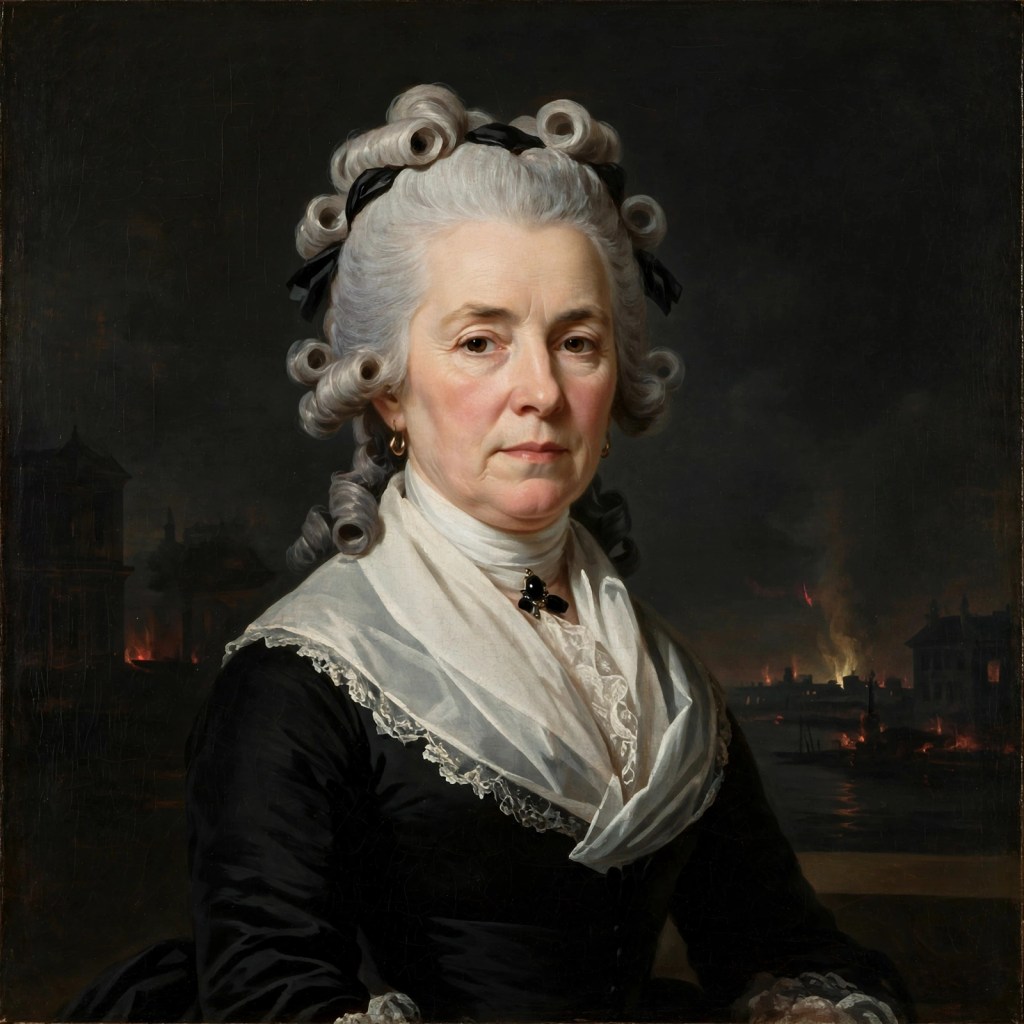
Rebecca Brewton Motte
Rebecca Brewton Motte — born 1737 in Charleston, SC (some say 1738); died 1815 on her Santee plantation. 🇺🇸
For five years she fed and supplied Marion’s Continentals. When the British fortified her own mansion as “Fort Motte,” she moved her family to the overseer’s house — then consented to the unthinkable: burn it down. She handed over East Indian fire-arrows from her late brother’s estate, and Marion’s men set her roof ablaze. The British surrendered. She watched her home burn to win a battle. That’s what the cause cost — and what she paid willingly.
#America250 #WomenOfTheRevolution #RevolutionaryWar #FortMotte #SCHistory #CarolinaAfterDeadline
-
“Lessons From History” #10: Why Free People Stay Free
THE SHORT VERSION: Ten stories, one verdict. Every system in this series promised equality and security — and delivered hunger, walls, and flight. Freedom is not just nicer. It is the only system that does not have to cage its own people to survive.
NOW THE FULL STORY:
Look back at the pattern. Plymouth tried common ownership and nearly starved — until families got their own plots. The Soviet Union, Mao’s China, and Cambodia took that idea to whole nations, and the toll ran into the millions. Cuba and Venezuela had wealth, land, and resources, and still ended in ration lines and exodus.
Then came the clean comparisons. The two Germanys and the two Koreas split one people by one border — and the free side prospered while the controlled side built walls, or still does, to keep its people in. The Berlin Wall was the confession written in concrete: a system that must shoot people for leaving has already lost the argument.
The free side did not win because its people were better. It won because its system let them be better: a farmer who keeps his crop plants more, a shopkeeper who sets his own price stocks his shelves, a citizen who can criticize his government corrects it before it hardens into tyranny. No committee in Moscow, Beijing, or Havana ever planned its way around that.
So what actually keeps people free? It is not a slogan. It is ordinary things, defended daily: the right to own what you work for, to speak and worship without permission, to vote rulers out, and to leave. Take any one away and the rest start to go with it — that is the road every story in this series walked, step by step.
THE LESSON: Freedom wins, but it does not win on autopilot. It wins because free people build, speak, vote, and stay — and because they remember what happens when they hand those things away. That is the lesson of ten days and ten stories. Do not forget it.
Thank you for following “Lessons From History.”
#LessonsFromHistory #CarolinaAfterDeadline
-

Brunswick County Fall Festival
🍂 Tomorrow night, Thursday, Oct. 29, 6–9 PM at the Government Complex in Bolivia: the Brunswick County Fall Festival. Hay rides, trunk or treat, games, and a costume contest.
-

Doris Redwine Turns 100
🎉 Help us celebrate a Shallotte treasure: Doris Redwine has turned 100 — and spent 78 of those years in the insurance business. That’s a lifetime of taking care of neighbors, and a milestone worth marking.
-

Publix Is Open in Calabash
🛒 Publix opened today at the Commons at Carolina Shores in Calabash — 46,791 square feet, with a deli, bakery, and pharmacy, and about 140 associates. It’s the third Brunswick County location.
-

Elizabeth Hutchinson Jackson
Elizabeth Hutchinson Jackson — born c. 1740 in County Antrim, Ireland; died November 1781 in Charleston, SC. 🇺🇸After the Waxhaws massacre she nursed the wounded, then bargained her sons Andrew and Robert out of a smallpox-ridden British prison — Robert died; 13-year-old Andrew barely lived. In the fall of 1781 she sailed to Charleston with other Waxhaw women to nurse American prisoners, two of her nephews among them. She caught cholera and died there, in an unmarked grave never found. She gave her life for other mothers’ sons. #America250 #WomenOfTheRevolution #RevolutionaryWar #Waxhaws #SCHistory #CarolinaAfterDeadline
-
“Lessons From History” #9: The Berlin Wall

“Lessons From History” #9: The Berlin Wall
THE SHORT VERSION: A government that could not keep its people from leaving built a wall to keep them in. For 28 years it divided a city — then, in one night, the people it was built to cage walked straight through it.
NOW THE FULL STORY:
Berliners went to sleep on August 12, 1961, in one city and woke up in two. Overnight, East German soldiers strung barbed wire straight through streets, parks, and living rooms. Two months earlier, East German leader Walter Ulbricht had said: “No one intends to build a wall.” He built one anyway — more than 2.7 million East Germans had already fled west, most through Berlin.
What began as wire became a 96-mile fortress ringing West Berlin: concrete panels, watchtowers, guard dogs, floodlights, and a “death strip” patrolled by armed guards under orders to shoot. At Checkpoint Charlie in October 1961, American and Soviet tanks faced each other gun-to-gun. The standoff ended without a shot — the wall did not.
The wall’s cruelty had a face. On August 17, 1962, 18-year-old Peter Fechter tried to climb it near Checkpoint Charlie with a friend. Guards shot him; he fell back into the death strip, crying for help as crowds watched from both sides. His friend made it over. Fechter bled to death unaided, for nearly an hour. More than 5,000 people still escaped over, under, and through the wall — but at least 140 died trying.
Then came November 9, 1989. After months of peaceful protests, East German spokesman Günter Schabowski fumbled a press conference and announced new travel rules effective “immediately, without delay.” Crowds surged to the checkpoints. Overwhelmed guards, with no orders to shoot, opened the gates. Berliners climbed the wall, hugged strangers, and hammered it apart.
THE LESSON: Every wall built to keep a regime’s people in is a confession. The Berlin Wall did not fail for lack of concrete or guards — it failed because no concrete can hold people who have decided to be free.
Tomorrow: the closing lesson — why free people stay free.
#LessonsFromHistory #CarolinaAfterDeadline
-

Former Brunswick County sheriff’s sergeant indicted after state investigation
🚨 A former Brunswick County sheriff’s sergeant has been indicted after a state investigation. Timothy Michael McNichol turned himself in this morning after a Brunswick County grand jury indicted him on one count of misdemeanor breaking and entering and one count of willful failure to discharge duties, following an investigation by the NC State Bureau of Investigation. According to court records cited by Coastal Carolina News, the charges stem from a Feb. 16 incident at a home on Cherry Road in Boiling Spring Lakes, where McNichol allegedly entered the home unlawfully while attempting to serve a warrant. The Sheriff’s Office itself requested the SBI investigation back in April. McNichol was released on an unsecured $1,000 bond, with a court date set for Dec. 8. He is the second former Sheriff’s Office employee charged in October after a state investigation — former lieutenant Daniel Heith Little was indicted Oct. 5 on 18 counts tied to alleged misuse of the department’s Flock license-plate-reader cameras. As with any criminal case, the charges are allegations, and McNichol is presumed innocent unless proven guilty.

