Category: Local News

  • Local Government 101: How Education Works Here — From Kindergarten to a New Career

    Local Government 101: How Education Works Here — From Kindergarten to a New Career

    Local Government 101: How education works here — from kindergarten to a new career

    New to Brunswick County? Here’s how education actually works here — and it’s not just for kids. It’s three systems that connect: our public schools, Brunswick Community College, and the workforce training system. And with new industry coming in, the retraining side matters more than ever.

    K-12: Brunswick County Schools runs 20 schools serving more than 13,000 students, from pre-K through 12th grade — nine elementary schools, four high schools, middle schools, an Early College High School, and a career and technical center. The district is run by a five-member elected Board of Education — Chairman Steven Barger, Vice-Chairman Steve Gainey, Robin Moffitt, Catherine Cooke, and Vickie Smith — with Superintendent Dale Cole running day-to-day operations. The board generally meets the first Tuesday of each month. The district is funded by the county and the state, and voters approved a $349.6 million school bond on Nov. 4 to pay for school construction and renovations (results unofficial until the Nov. 13 canvass). The schools are improving, too: 14 of the district’s 20 schools met or exceeded state growth expectations last year, up from 8 the year before.

    THE COLLEGE: Brunswick Community College’s main campus is at 50 College Road in Bolivia. Founded in 1979, BCC offers associate degrees, diplomas, and certificates — and two years there can transfer toward a bachelor’s degree at a four-year university. High school students can also get a head start through dual enrollment and the Early College program.

    RETRAINING FOR ADULTS: This is the part most people don’t know about. BCC’s Workforce and Industry Training programs offer short-term training and industry credentials that can be finished in six months or less — welding, HVAC, electrical work, integrated machine technology, construction and blueprint reading, project management, automotive, culinary arts, health care, cosmetology, and IT. BCC also runs pre-apprenticeship and registered apprenticeship programs that combine classroom learning with paid on-the-job training at local employers — you learn while you earn.

    NO DIPLOMA? NO PROBLEM: BCC offers a free high school equivalency program — GED or HiSET — including a five-week Honor Boot Camp for motivated learners, plus an adult high school diploma option.

    WHERE TO START: The NCWorks Career Center sits right on BCC’s main campus, Building A, 50 College Road, Bolivia — 910-755-8508, Monday through Friday, 8:30 a.m. to 4:30 p.m. It’s free: career assessments, résumé and interview help, job matching, and — for eligible adults and dislocated workers — federally funded training through the Workforce Innovation and Opportunity Act (WIOA) that can help pay for the training itself. BCC’s own Career Center, on the second floor of Building A, adds job-search help, scholarship referrals, and veterans services.

    And the Brunswick County Literacy Council, at 282 Ocean Highway East in Supply — (910) 754-7323 — offers free one-on-one tutoring for adults in reading, writing, and math, GED test prep, work skills, and financial literacy.

    WHY IT MATTERS NOW: New employers are coming — Epsilon’s $650 million project with 500 jobs at full build-out, U.S. MgO’s 35-plus jobs, and “Project Infinity,” a finalist that could bring about 200 more. Those jobs will need welders, electricians, HVAC techs, machinists, and health care workers. The training to get them is already here, mostly free or affordable, and most of it runs through one campus in Bolivia.

    If you — or someone you know — has been thinking about a new skill or a new career, the first step is a phone call to NCWorks at 910-755-8508.
  • Local Government 101: Who polices our towns?

    Local Government 101: Who polices our towns?

    📚 Local Government 101

    🚔 New to Brunswick County? Here’s who actually polices our towns — because it depends on exactly where you live.

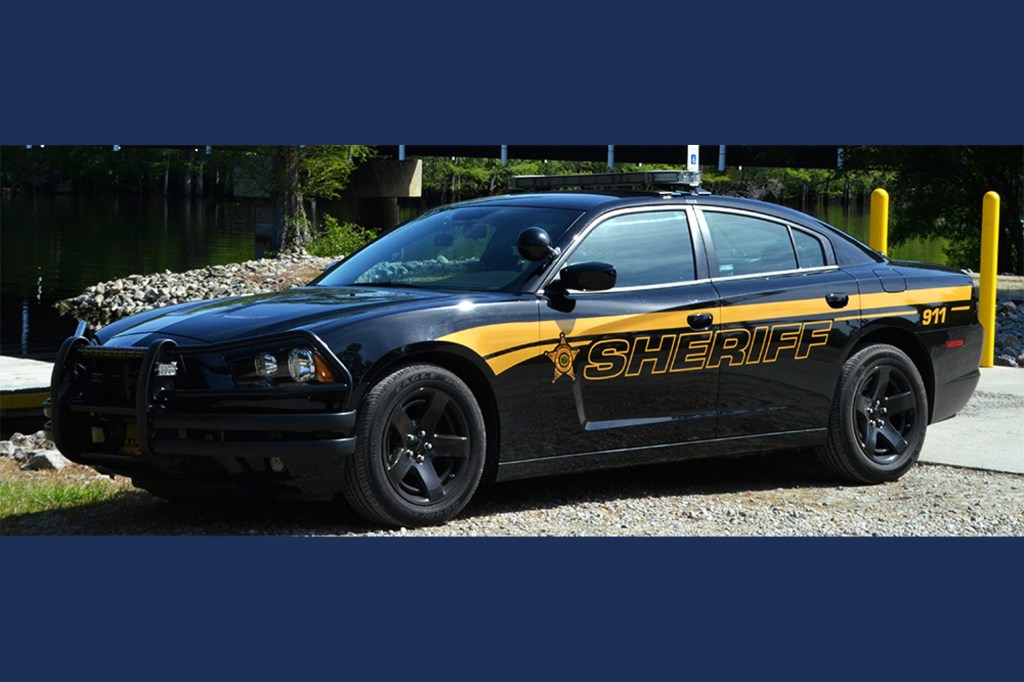
    👮 THE SHERIFF’S OFFICE: The Brunswick County Sheriff’s Office, led by Sheriff Brian Chism, is the backbone of law enforcement here. With roughly 370 deputies, it patrols the whole county in eight zones, runs the jail in Bolivia, and handles investigations, court security, and the county’s 911 dispatch center.

    Seven of the county’s 19 towns have no police department of their own and rely entirely on the Sheriff’s Office: Belville, Bolivia, Calabash, Carolina Shores, Sandy Creek, St. James, and Varnamtown.

    That includes us. Carolina Shores has no sworn law enforcement of its own — the town relies on the Sheriff’s Office, and its Code Compliance Division (non-sworn officers) handles code issues, not crimes. Calabash is patrolled by the Sheriff’s Office too. The Sheriff’s Office keeps a substation in Calabash at 10176 Beach Drive, handy for things like gun permits — concealed carry and pistol purchase permits are handled there and at the main office in Bolivia and a Leland office.

    🏖️ TOWN POLICE: Several beach towns have their own departments — Sunset Beach, Ocean Isle Beach, Shallotte, Holden Beach, Oak Island, Southport, and Leland all run town police. If you live in one of those towns, your town officers are your first call for local issues, and the Sheriff’s Office backs them up when needed. Across the state line, North Myrtle Beach has its own city police department.

    🛣️ STATE TROOPERS: The N.C. State Highway Patrol covers the highways — U.S. 17, N.C. 130, N.C. 179, and the rest. So a traffic stop on the highway will usually be a trooper, while the same stop on a town street will be a town officer or a deputy.

    📞 What to do: in an emergency, always call 911 — the county dispatch center routes it to the right agency, so you don’t have to figure out whose jurisdiction you’re in. For non-emergencies, the Sheriff’s Office can be reached at 910-253-2777. And if you’re new here, it’s worth knowing which agency covers your street before you need them — especially whether you’re in a town with its own police or in Sheriff’s Office territory.

  • Why Did the Chicken Cross the Road? To Beat Me to the Doctor’s Office

    I’m always a big chicken about going to the doctor. And today, walking in, look who was already there ahead of me — strutting across the parking lot like he had an appointment and I was late for mine. 😂

    Somebody in Brunswick County is missing a chicken. Or maybe he was just there for moral support. Either way, he made the waiting room a whole lot better.

  • American Legion Post 543 Gives $1,000 to Matthew’s Ministry

    American Legion Post 543 Gives $1,000 to Matthew's Ministry

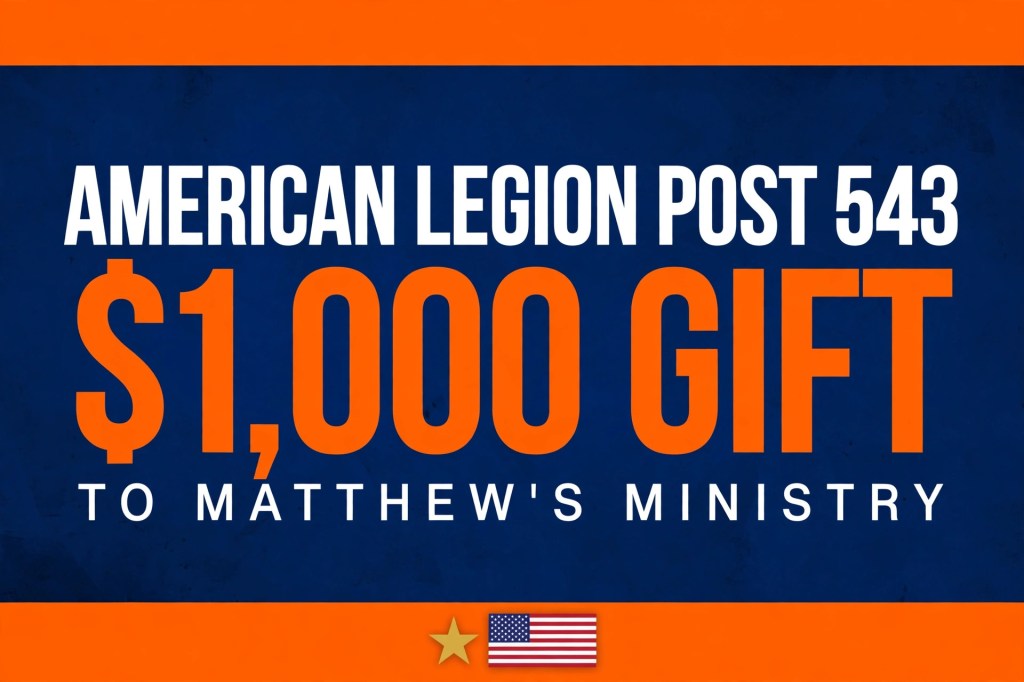
    Veterans helping kids: American Legion Post 543 presented a $1,000 gift to Matthew’s Ministry.

    Kristie Disbrow addressed the post’s executive committee about the ministry’s work, and Commander Michael Carton leads the post. Another example of our local Legion posts putting money back into the community.

  • New Jobs Coming to Brunswick County

    New Jobs Coming to Brunswick County

    Big news for Brunswick County workers: three major industrial projects are in the pipeline.

    Epsilon is planning a $650 million facility with 500 jobs at full build-out, with groundbreaking now expected in 2027. US MgO is bringing 35+ jobs at about $52 an hour on a $5 million investment. And a third project — “Project Infinity” — has Brunswick County as a finalist, with about 200 jobs if we’re chosen.

    The county also landed a $6.275 million grant for the rail park. More good-paying jobs close to home — we’ll keep following each one as it develops.

  • Holden Beach Fishing Pier Is Coming Down

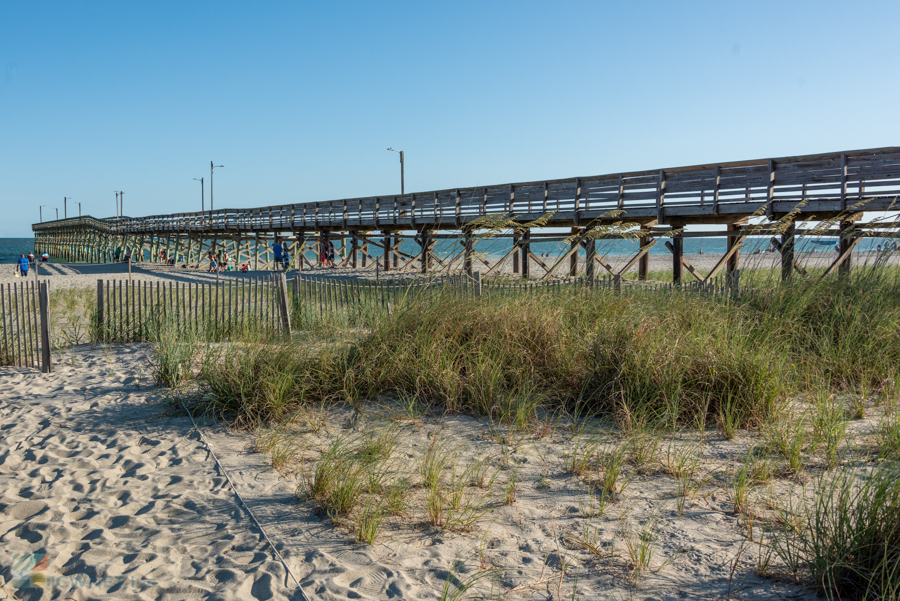
    Holden Beach Fishing Pier

    The Holden Beach Fishing Pier is coming down. The town board voted unanimously on October 27 to demolish the pier, which has been closed since 2022 and was condemned on October 12.

    A $7.3 million bond to rebuild it failed last November, but the town is pursuing demolition and replacement permits together — and a pledge drive has already raised about $516,000 toward a new pier.

    It’s the end of a landmark a lot of us grew up fishing from. We’ll keep following what comes next.

    Photo: Town of Holden Beach

  • BRUNSWICK COUNTY’S CHARTER CAPTAINS: Meet Capt. Keith Logan

    BRUNSWICK COUNTY’S CHARTER CAPTAINS: Meet Capt. Keith Logan

    THE SHORT VERSION: Capt. Keith Logan has spent more than 40 years fishing the waters off Brunswick County’s beaches — and he learned them as a kid. The Ocean Isle Beach native grew up fishing Ocean Isle Beach and Sunset Beach with his father, Cecil Logan, and in 1991 he turned that lifetime on the water into North Myrtle Beach Fishing Charters.

    HOW HE GOT HERE: Logan’s range runs from the backwaters of Little River through Calabash, Sunset Beach, and Ocean Isle Beach to offshore Carolina waters. His background covers just about all of it — inshore, nearshore, offshore, deep sea, Gulf Stream, tournament, commercial, and big-game fishing. Today his private charter schedule focuses on inshore, light-tackle trips aboard his 25-foot Scout bay boat — the kind of trip built for families, beginners, and kids as well as seasoned anglers.

    WHAT SETS HIM APART: He’s a U.S. Coast Guard Master Captain, and a tournament angler with first-place finishes including the Capt. Brant’s Jolly Mon King Mackerel Tournament and the 2011 Martini’s Fall Hook-A-Hoo Rodeo in Southport. He’s also an IGFA-certified captain who has caught more than 100 giant bluefin tuna over the years.

    His philosophy fits the way he runs trips: quiet, easy-going, and all about local knowledge earned season by season on these waters.

    (Sources: North Myrtle Beach Fishing Charters; Fin & Field. Photo: Captain Experiences / Low Country Fishing Charters guide profile. Note: Capt. Logan’s operation is based in Little River, SC, fishing waters that include Calabash, Sunset Beach, and Ocean Isle Beach.)

  • Is Congress actually broken? What the numbers say — and what reached Brunswick County

    Is Congress actually broken? What the numbers say — and what reached Brunswick County

    Everybody says Congress is broken. But how would you actually measure that — and what has Congress actually done for Brunswick County in the last two years? Here’s the honest version, using numbers anyone can check.

    HOW TO MEASURE IT

    1. The funnel: what gets introduced vs. what becomes law
      GovTrack tracks every bill’s fate. In the 118th Congress (2023–24), 19,315 bills and resolutions were introduced. Only 274 became law as standalone bills — about 1%. Another 340 or so got folded into bigger bills, for 614 total. Over 90% died.
      Compare: the 100th Congress (1987–88) enacted 761 standalone laws; the 95th (1977–78) enacted 804; the 117th (2021–22) enacted 365.
      The catch: fewer laws doesn’t mean less work. Congress has enacted roughly 4–6 million words of new law in each two-year Congress since World War II — just in fewer, much larger bills. One 2,000-page omnibus counts as one law.
    2. The bottleneck: bills that pass one chamber and die in the other
      In the 118th Congress, 685 bills got a significant vote in one chamber but were never enacted — passed the House or the Senate, then died waiting on the other side. That’s the logjam measured directly: bills aren’t just dying in committee, they’re stalling between the two chambers.
    3. The must-pass test
      Twelve spending bills are due every year. In recent years Congress has routinely missed the deadline, governing by stopgap continuing resolutions and giant omnibus packages instead. A shutdown is the ultimate failure: Congress couldn’t do its most basic job.

    WHAT ACTUALLY REACHED BRUNSWICK COUNTY

    • Holden Beach: the FY2024 Energy and Water bill included $425,000 for the federal share of the Army Corps’ work on Holden Beach storm damage and erosion. Same bill: $10 million for the North Carolina coastal mapping study, which maps waterways to flag flood risks.
    • Brunswick Town / Fort Anderson: a $2.5 million NOAA grant in August 2025 to keep building wave attenuators along the shoreline, protecting the historic site from erosion.
    • Tropical Storm Debby (August 2024): Brunswick County was in the federal emergency declaration, covering emergency protective measures, mass care and shelter support — and local residents and businesses got IRS tax relief, with deadlines pushed to February 3, 2025.
    • Social Security Fairness Act (signed January 5, 2025): repealed the rules that cut Social Security for retired teachers, police, firefighters and other public employees who also earned a government pension. That raised checks for a lot of local retirees.

    But here’s the other side: the big local wish list is still just requests, not law. $4.6 million for Bolivia water lines, $5.5 million for Longwood Road water lines, $4.9 million for Shallotte-area water lines, and $5.8 million to finish the Brunswick Town shoreline work are FY2026 project requests — they only become real if the FY2026 spending bills pass, and those haven’t. Same for the Corps’ 50-year beach nourishment study for Oak Island and Holden Beach: the study is underway, but authorization and funding are still ahead of it.

    THE BOTTOM LINE
    The money that reaches us tends to come through funding bills and agencies, not through new laws with the county’s name on them — and the headline local projects are still sitting in the request pile. A Congress that passes little because the country disagrees is different from a Congress that can’t pass a budget. These numbers let you tell those two apart.

    Sources: GovTrack bill statistics; House Appropriations; NOAA; FEMA; IRS.
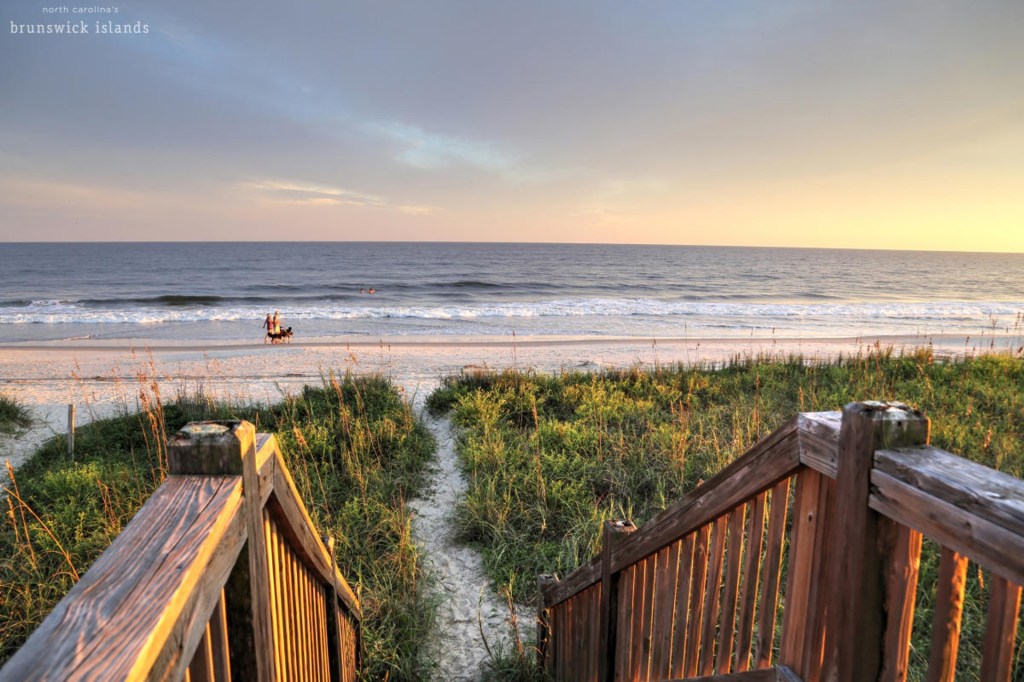
    Photo: Holden Beach, NC Brunswick Islands.

  • Midterms in history: how every president’s party fared

    Midterms in history: how every president’s party fared

    Yesterday’s midterms are still being counted, so here’s the full history for context: every midterm election since 1934, and how the president’s party did in the House and Senate. Numbers are the seat change for the president’s party (source: the American Presidency Project, UC Santa Barbara).

    Yesterday — Nov. 3, 2026 (tentative, races still being called)
    Democrats have won control of both chambers. The House stands at a Democratic net gain of about 38 seats, and the Senate at a net gain of at least 7 — with two Senate races and dozens of House races still uncalled, so these numbers can still move.

    The full record — House / Senate change for the president’s party
    1934 — FDR: +9 / +9
    1938 — FDR: −72 / −7
    1942 — FDR: −45 / −9
    1946 — Truman: −56 / −12
    1950 — Truman: −28 / −6
    1954 — Eisenhower: −18 / −1
    1958 — Eisenhower: −48 / −13
    1962 — Kennedy: −4 / +3
    1966 — Johnson: −47 / −4
    1970 — Nixon: −12 / +2
    1974 — Ford: −48 / −5
    1978 — Carter: −15 / −3
    1982 — Reagan: −26 / +1
    1986 — Reagan: −5 / −8
    1990 — G.H.W. Bush: −8 / −1
    1994 — Clinton: −54 / −8
    1998 — Clinton: +4 / 0
    2002 — G.W. Bush: +8 / +2
    2006 — G.W. Bush: −30 / −6
    2010 — Obama: −63 / −6
    2014 — Obama: −13 / −9
    2018 — Trump: −41 / +2
    2022 — Biden: −9 / +1
    2026* — Trump: −38* / −7* (*tentative)

    What the pattern shows
    Losing House seats in a midterm is the norm, not the exception: since 1946, the president’s party has lost House seats in 18 of 20 midterms, averaging about 26 seats. Only three times has the president’s party actually gained House seats — FDR in 1934, Clinton in 1998, and George W. Bush in 2002.

    The biggest House losses in this whole span: FDR in 1938 (−72), Obama in 2010 (−63), Truman in 1946 (−56), and Clinton in 1994 (−54).

    The Senate is a different story — the president’s party has actually gained Senate seats in 7 of these 23 midterms, because only about a third of Senate seats are on the ballot and the map matters as much as the mood. That’s why 2018 stands out: the president’s party lost the House by 41 but gained 2 in the Senate. In 2026, both chambers moved the same direction.

    One bit of history: this is only the second time a president has served two non-consecutive terms — the first was Grover Cleveland, whose 1894 midterm cost his party 125 House seats, still the largest midterm loss ever.

  • Local Government 101: How fire and ambulance service works here

    Local Government 101: How fire and ambulance service works here

    📚 Local Government 101

    🏠 New to Brunswick County? Here’s how fire and ambulance service actually works here — because it’s not one system, it’s three, working together.

    🚒 FIRE: Most of the fire departments in our area are private nonprofit volunteer departments — Calabash, Grissettown-Longwood, Shallotte Point, and others. They’re funded by a county fire fee on property owners, plus grants and fundraising. But “volunteer” is mostly history now: with call volume way up and volunteers harder to find, most of these departments are now staffed mainly by paid firefighters.

    A few towns run their own: Sunset Beach has a municipal combination department, Ocean Isle Beach has a town department, and Shallotte Fire/Rescue is a town department with full-time career firefighters.

    Here in Carolina Shores, fire protection comes from the Calabash Fire Department — a nonprofit with volunteer, part-time, and full-time staff, 14 vehicles including a fire boat, with stations in Calabash and near Brunswick Plantation. Departments back each other up on big calls through mutual aid, so the closest crew responds first.

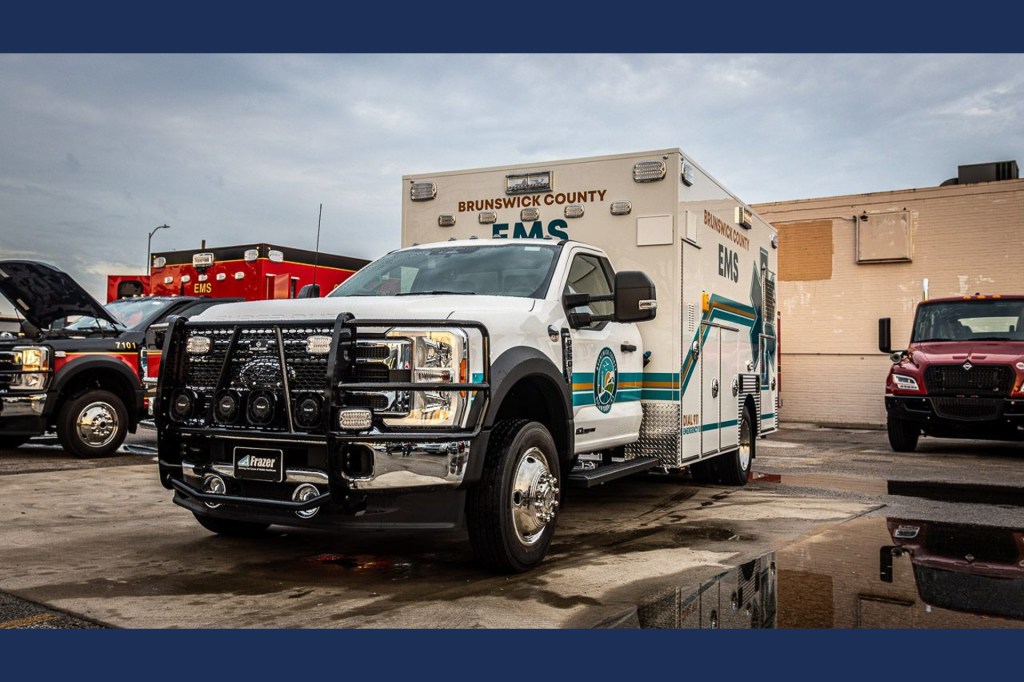
    🚑 AMBULANCE: This part is county government. Brunswick County EMS is a paramedic-level service run by the county out of Bolivia, with 23 ambulances and 16 quick-response vehicles stationed around the county. Our local base is EMS Base 6 in Calabash, on Beach Drive SW; the Sunset Beach side is covered by Base 3 off Old Georgetown Road. When you call 911, the county dispatch center sends the closest ambulance — not necessarily the one from your town.

    Here’s the part most newcomers don’t know: your local firefighters are usually your first medical responders. Roughly half to 60% of what our fire departments run are medical calls, not fires. Firefighters arrive first to stabilize, then the county ambulance transports. For life-or-death emergencies, the county can call in the medical helicopter from Novant Health Brunswick Medical Center in Bolivia.

    💰 THE FUNDING FIGHT: Brunswick County is the only county in North Carolina still funding fire service with a fire fee, a system from 1999 that county leaders now say can’t keep up with growth. The county board formed a committee in June to design a replacement — likely a fire tax — targeted for July 1, 2027. That decision will affect every homeowner’s bill and every department’s staffing, and we’ll be following it.

    📞 What to do: in any emergency, call 911 and know your exact address — including your subdivision and any gate code. The dispatcher, the fire crew, and the ambulance all work off that.