Everybody says Congress is broken. But how would you actually measure that — and what has Congress actually done for Brunswick County in the last two years? Here’s the honest version, using numbers anyone can check.
HOW TO MEASURE IT
- The funnel: what gets introduced vs. what becomes law
GovTrack tracks every bill’s fate. In the 118th Congress (2023–24), 19,315 bills and resolutions were introduced. Only 274 became law as standalone bills — about 1%. Another 340 or so got folded into bigger bills, for 614 total. Over 90% died.
Compare: the 100th Congress (1987–88) enacted 761 standalone laws; the 95th (1977–78) enacted 804; the 117th (2021–22) enacted 365.
The catch: fewer laws doesn’t mean less work. Congress has enacted roughly 4–6 million words of new law in each two-year Congress since World War II — just in fewer, much larger bills. One 2,000-page omnibus counts as one law. - The bottleneck: bills that pass one chamber and die in the other
In the 118th Congress, 685 bills got a significant vote in one chamber but were never enacted — passed the House or the Senate, then died waiting on the other side. That’s the logjam measured directly: bills aren’t just dying in committee, they’re stalling between the two chambers. - The must-pass test
Twelve spending bills are due every year. In recent years Congress has routinely missed the deadline, governing by stopgap continuing resolutions and giant omnibus packages instead. A shutdown is the ultimate failure: Congress couldn’t do its most basic job.
WHAT ACTUALLY REACHED BRUNSWICK COUNTY
- Holden Beach: the FY2024 Energy and Water bill included $425,000 for the federal share of the Army Corps’ work on Holden Beach storm damage and erosion. Same bill: $10 million for the North Carolina coastal mapping study, which maps waterways to flag flood risks.
- Brunswick Town / Fort Anderson: a $2.5 million NOAA grant in August 2025 to keep building wave attenuators along the shoreline, protecting the historic site from erosion.
- Tropical Storm Debby (August 2024): Brunswick County was in the federal emergency declaration, covering emergency protective measures, mass care and shelter support — and local residents and businesses got IRS tax relief, with deadlines pushed to February 3, 2025.
- Social Security Fairness Act (signed January 5, 2025): repealed the rules that cut Social Security for retired teachers, police, firefighters and other public employees who also earned a government pension. That raised checks for a lot of local retirees.
But here’s the other side: the big local wish list is still just requests, not law. $4.6 million for Bolivia water lines, $5.5 million for Longwood Road water lines, $4.9 million for Shallotte-area water lines, and $5.8 million to finish the Brunswick Town shoreline work are FY2026 project requests — they only become real if the FY2026 spending bills pass, and those haven’t. Same for the Corps’ 50-year beach nourishment study for Oak Island and Holden Beach: the study is underway, but authorization and funding are still ahead of it.
THE BOTTOM LINE
The money that reaches us tends to come through funding bills and agencies, not through new laws with the county’s name on them — and the headline local projects are still sitting in the request pile. A Congress that passes little because the country disagrees is different from a Congress that can’t pass a budget. These numbers let you tell those two apart.
Sources: GovTrack bill statistics; House Appropriations; NOAA; FEMA; IRS.
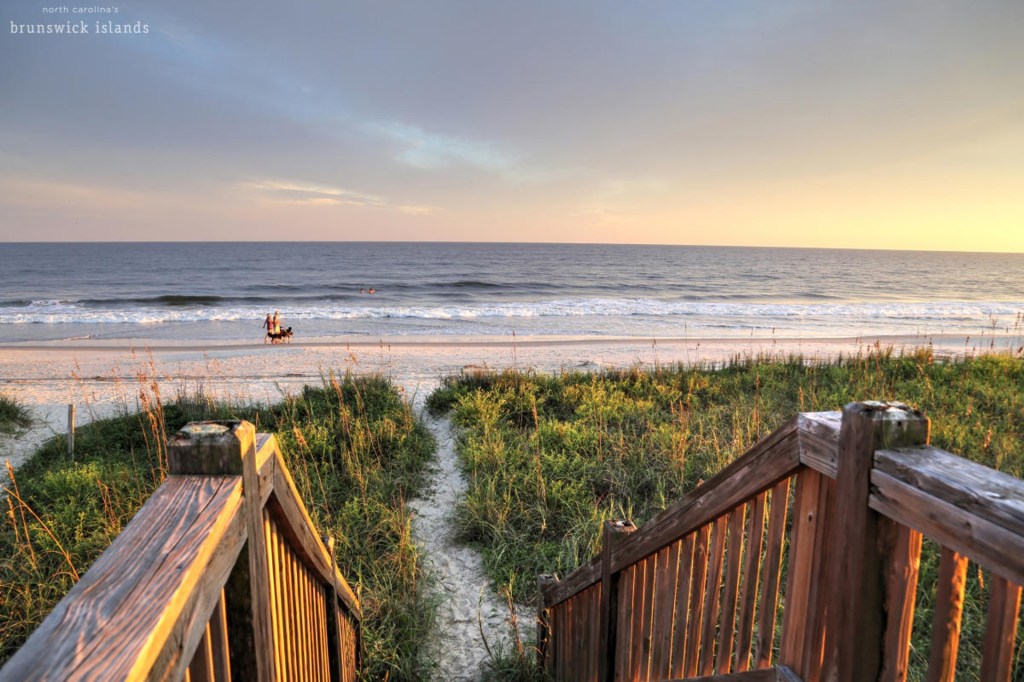
Photo: Holden Beach, NC Brunswick Islands.


Leave a Reply