
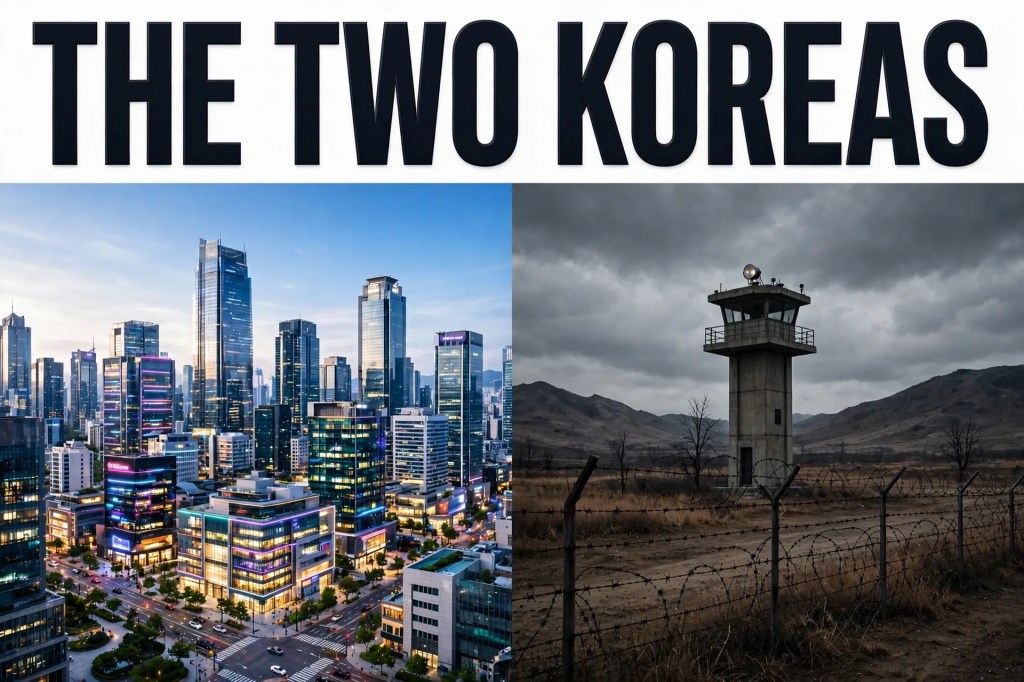
“Lessons From History” #6: The Two Koreas
THE SHORT VERSION: One people, one language, one history — split in 1945 into two Koreas. The South chose markets and, eventually, freedom. The North chose communism and a family dynasty. Eighty years later, the South is rich and free, and the North is starving behind guns. The result is not close.
NOW THE FULL STORY:
Korea was one country until World War II ended, when the victors split it at the 38th parallel: Soviets north, Americans south. In 1948 the split became permanent — the Republic of Korea in the south, Kim Il-sung’s Democratic People’s Republic in the north. In June 1950 the North invaded. An armistice in 1953 stopped the fighting, but no peace treaty was ever signed.
The South rebuilt on private property, exports, and trade. From one of the poorest places on earth in the 1950s, it became one of the richest. In 1987, after decades of authoritarian rule, South Koreans won free elections. Today they vote, travel, speak, and worship freely, and live roughly a decade longer than their northern cousins.
The North went the other way. The state owns everything, the Kim family has ruled for three generations, and the regime spends on nuclear weapons and missiles while its people go hungry. In the 1990s, after Soviet aid collapsed, famine killed hundreds of thousands — by some estimates more than a million. Escapees still risk their lives to reach the South, and those caught are punished, along with their families.
THE LESSON: Germany’s split is over; Korea’s still stands, and it is the starkest comparison on earth. Same people, same language, same starting point in 1945. One side built prosperity and freedom. The other built a prison state that cannot feed its own people. The divide is not about geography. It is about the system.
Tomorrow: Cuba — an island paradise turned into a prison, ninety miles from Florida.
#LessonsFromHistory #CarolinaAfterDeadline


Leave a Reply